How long do ATV batteries last? Signs it is time to replace yours
Understand ATV battery life, slow starting, repeated discharge and when testing or replacement makes sense for AGM, conventional and lithium batteries.
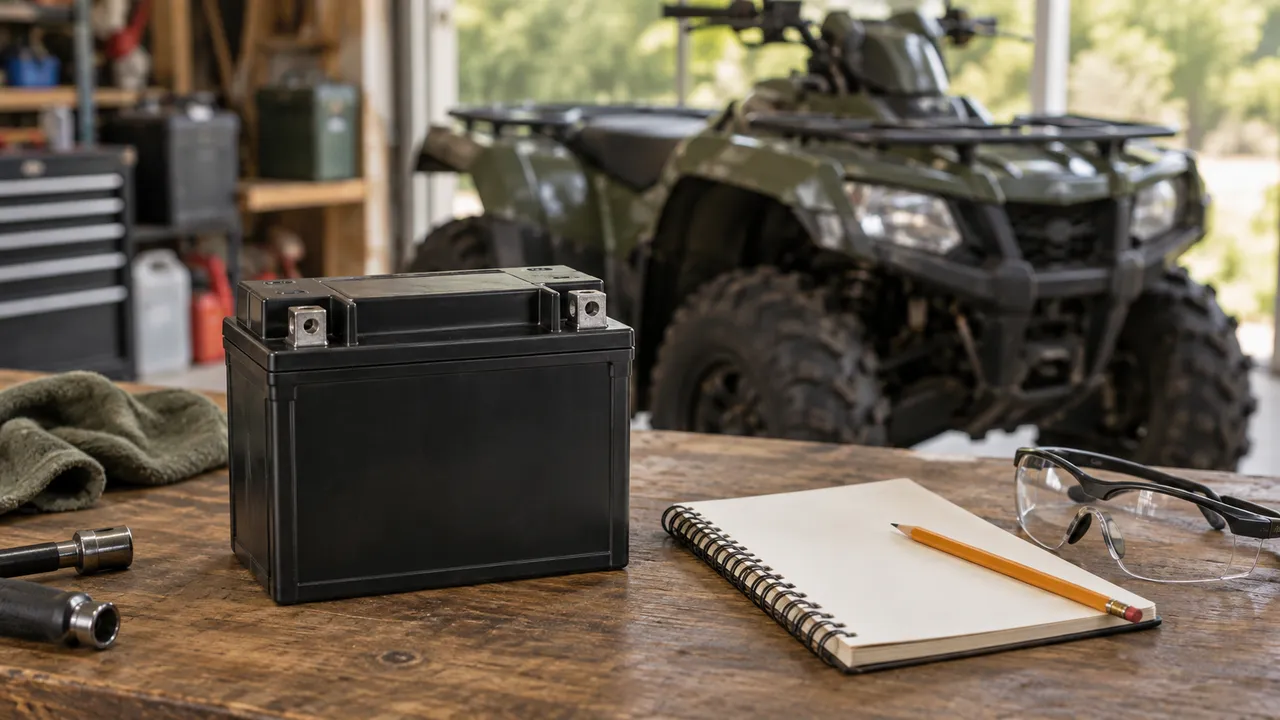
How long do ATV batteries last? Yuasa’s sealed AGM batteries typically last three to five years, while its conventional flooded batteries average two to three years. These are manufacturer estimates, not a deadline for all ATV batteries. Battery type, charging and proper maintenance matter: test a battery that starts slowly or repeatedly loses charge.
Chargers and maintainers to consider
Choose by battery chemistry, capacity and permitted charging current. The GENIUS1 offers selectable modes; the Junior 750mA and CTEK US 0.8 are lead-acid options. For lithium, confirm the battery maker approves the exact charger and temperature range.

NOCO GENIUS1
1A smart charger with 6V and 12V modes, including dedicated AGM and lithium settings. Best suited to owners who need more than one charging profile.
Shop on Amazon ↗
Battery Tender Junior 12V 750mA
Automatic 0.75A charger and maintainer for compatible 12V lead-acid, AGM and gel batteries. This 750mA model is not the lithium-selectable Junior.
Shop on Amazon ↗
CTEK US 0.8 (56-865)
0.8A automatic 12V lead-acid charger with a six-step cycle and float/pulse maintenance. A compact option for seasonal powersports storage.
Shop on Amazon ↗ATV battery life: how battery type changes the estimate
Keep the installation date and purchase receipt with your ATV records. Age helps explain a gradual change in starting performance, but a calendar cannot tell you how much usable capacity remains. Maintained ATV batteries and those left discharged through winter can have very different histories at the same age.
The Yuasa averages describe its lead-acid products, including sealed AGM batteries and conventional flooded batteries. They do not establish the life of every replacement brand or lithium batteries. Ask a lithium manufacturer about its particular starting battery and warranty conditions rather than applying an AGM estimate. Warranty duration is a contract term, not guaranteed service life.
Signs your ATV battery needs testing
Compare cranking behavior with the way your machine normally starts. Slower cranking after an appropriate full charge, repeated need for charging or a sudden loss of starting ability deserves investigation. Record when it happens: after storage, in cold weather, after using a winch or even immediately after charging.
These symptoms do not identify the battery by themselves. A loose terminal, damaged ground cable or starter fault can produce similar behavior. A charger completion light tells you about that charging cycle; it does not prove the battery can deliver the required starting current.
| What you notice | Useful next check |
|---|---|
| Slow cranking after charging | Test battery performance and inspect cables. |
| Starts after charging, then fails while parked | Check parked electrical drain and charge retention. |
| Struggles after accessory use | Compare loads with charging-system output. |
| Cracked, leaking or swollen case | Stop using it and arrange inspection or replacement. |
Separate a worn battery from an ATV electrical fault
Start with a visual inspection and clean, secure connections. Then charge an undamaged battery according to its instructions and arrange a test suitable for its chemistry, size and starting rating. Give the technician the symptoms and charging history so a single reading is not interpreted without context.
If it passes testing but goes flat again in the vehicle, investigate current draw with the ignition off and the charging system while running. A new battery can suffer the same problem. Do not repeatedly buy replacements for an unresolved electrical fault.
What can shorten the life of ATV batteries?
An ATV starting battery supplies a brief demanding load. Using lights or other equipment with the engine off can leave it unable to start. Frequent short outings and extended accessory use are reasons to check whether the machine restores the charge it uses.
Storage deserves its own plan. An ignition-off load continues even when you never touch the starter. Choose a documented storage routine for the actual battery chemistry and vehicle, and check the battery rather than judging its condition from how many miles you rode.
Look beyond the battery label when inspecting the installation. The hold-down must secure the case, cables must reach without strain and protective covers must be in place. Mud, moisture and neglected connections can turn routine service into a breakdown.
Battery maintenance: make your ATV battery last longer
ATV owners can make battery care part of ride preparation and storage. Record charge checks, unusually slow starts and accessories added. This helps diagnose ATV batteries that fail repeatedly. Before storage, check whether the vehicle manual requires you to disconnect the battery to eliminate parked electrical drain.
Charge the battery with an approved smart charger and follow its maker’s storage instructions. For infrequent use, decide whether an approved battery maintainer or scheduled checks fit your garage. AGM and lithium batteries can require different routines. Choose equipment for the type of battery actually installed, including conventional models that need electrolyte-level checks.
When to replace your battery
Replace ATV batteries when inspection finds damage or appropriate testing confirms they no longer meet the application’s demands. Before a remote ride, address unreliable starting while testing and parts are accessible. Repeated slow starts are a reason to act, even if the battery is younger than an advertised lifespan.
Confirm the year and trim, battery dimensions, polarity and electrical requirements before ordering. Preserve the old part number in your records, but cross-check it because a previous owner may have installed a substitute. Arrange recycling through a battery retailer or the appropriate local collection service.
Frequently asked questions
Should I replace an ATV battery every three years?
Use age to prompt inspection and testing, rather than replacing every battery on a fixed schedule. Damage, failed performance testing and recurring starting trouble matter more than a birthday.
Does a battery that holds voltage still need replacing?
It can. A voltage reading alone does not establish starting performance or usable capacity. Have a suspect battery tested with equipment appropriate for its chemistry and rating.
Will lithium automatically last longer than AGM?
No universal lifespan comparison applies to every product. Compare documented fitment, charging requirements, care instructions and warranty terms for the specific batteries.
Why did my new ATV battery fail quickly?
Check installation, initial preparation, charging-system condition and parked electrical drain. A new battery can become discharged by an unresolved vehicle fault without having reached the end of its useful life.
Bring it back to your ride
Find your ATV in the catalog, browse battery size references or explore the other field guides.