ATV battery keeps dying: find the cause before replacing it
Diagnose an ATV battery that keeps dying by separating parked drain, inadequate charging, accessory demand and battery failure. Use a repeatable test log.
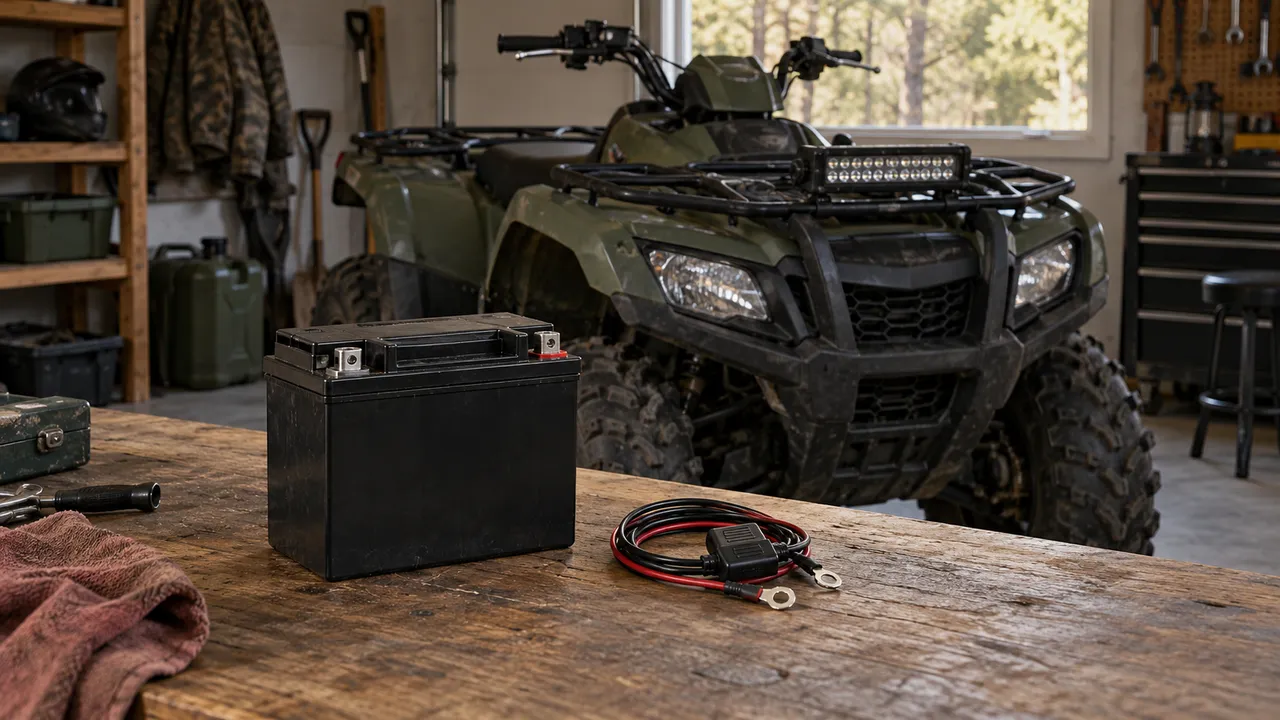
If your ATV battery keeps dying, first establish whether it loses charge while parked or during use. Charge and test the battery, inspect connections, then check charging output and key-off drain as the symptom requires. Replacing the battery without fixing a charging fault or unwanted electrical load can leave the new one flat too.
Start with when the battery goes flat
A battery that is flat after a long parked interval presents a different problem from one that loses power during a ride. Note the time since its last charge, recent trips and accessories used. Include whether the ignition was fully switched off rather than only stopping the engine.
Describe what “dead” means in practice. A blank instrument panel, slow crank and a normally cranking engine that will not start require different checks. Make sure the symptom is an electrical supply problem before attributing it to the battery.
Record recent additions or repairs: lights, a winch controller, an outlet or battery installation. Changes are diagnostic leads, not proof.
Establish whether the battery can hold and deliver charge
Inspect the battery and cable connections before charging. Use a charger approved for the battery chemistry and follow its instructions. After charging and the prescribed rest interval, record voltage at the battery terminals and obtain a suitable performance test if starting remains weak.
A battery can lose usable capacity without an obvious case defect. Repeated deep discharge can also damage a lead-acid battery. Conversely, a low reading after neglect does not prove it must be replaced; correct charging and testing establish a better starting point.
Keep the battery test result. If it passes, move on to the vehicle instead of buying another battery immediately. If it fails, replace it with the proper application and still investigate why it was repeatedly discharged.
Battery drains overnight: investigate key-off drain
Look for an accessory that remains powered after the ignition is off. Check charging leads, added wiring and switches visually. An aftermarket outlet can have its own supply path, so the handlebar switch position may not tell you whether every circuit is off.
Some vehicles have legitimate standby loads; excessive parasitic battery drain needs diagnosis. A technician can measure key-off current after the required sleep interval and compare it with the exact service specification. Circuit isolation identifies the unwanted load. Do not apply a generic acceptable-drain number to every ATV.
A suitable low-current DC clamp can avoid opening the circuit, but its resolution must suit the measurement. A series-meter test needs the correct range, fused inputs and procedure; starting the engine through that setup can damage the meter. Have a technician perform it if the method is unfamiliar.
If it dies during riding, check charging and electrical load
Test vehicle charging output using the manual’s engine speed and load conditions. Include the battery connections and accessible charging-circuit wiring in the inspection. A charged battery can temporarily mask inadequate charging until its stored energy is used.
Compare the symptom with accessory use. Repeated winching, a light bar and frequent starts can demand energy that the riding pattern does not replace. An accessory-load review should consider charging capacity and operation, rather than treating a larger battery as an automatic cure.
| Pattern | Useful next check |
|---|---|
| Flat after parking | Key-off drain, accessory wiring and battery retention of charge. |
| Flat after winching or accessory use | Electrical demand and charging output under specified conditions. |
| Weak immediately after a full charge | Battery performance and starter-circuit connections. |
| Intermittent power after rough trails | Hold-down, terminals and wiring disturbed by movement. |
| New battery repeats the same failure | Underlying charging or drain fault, plus installation requirements. |
Separate inactivity from an electrical fault
Infrequent use needs a charge-maintenance plan suited to the battery and vehicle. The fact that a battery goes flat after months unattended is not equivalent to a battery losing charge overnight after a verified full charge.
Check that a maintainer has power and a sound connection. A loose charging connector or unpowered outlet can make a storage setup ineffective. If a lithium battery has entered protective shutdown, follow the product recovery procedure rather than assuming ordinary lead-acid charging will wake it.
Confirm the fix before relying on the ATV
After repairing the identified fault, repeat the conditions that previously caused trouble. Recheck starting behavior and rested voltage after a comparable parked interval, or charging output during the same accessory load.
Keep the findings with your maintenance records. If the battery was damaged by repeated discharge, a repair and replacement may both be necessary. Match any new battery to the actual model, year and trim.
Frequently asked questions
Why does my new ATV battery keep dying?
A new battery can still be discharged by an unwanted load or inadequate vehicle charging. Check installation, activation requirements, battery condition and the underlying vehicle fault.
Can a winch drain an ATV battery?
Winching draws energy from the electrical system. Repeated use can reduce charge when the charging system and riding pattern do not replace that energy. Assess the actual load and application.
Will a bigger battery fix a parked drain?
It may delay the symptom, but it does not repair the unwanted load. Find the drain first and use an approved battery fitment.
Should I disconnect the battery when parked?
Follow the owner’s manual, including any effects on stored settings or security systems. Disconnection is not a substitute for diagnosing a rapid unexplained discharge.
Bring it back to your ride
Find your ATV in the catalog, browse battery size references or explore the other field guides.