ATV won’t start: battery, starter and engine checks
Separate no-crank from crank-no-start symptoms, check battery connections and starting controls, and decide when your ATV needs a battery test or service.
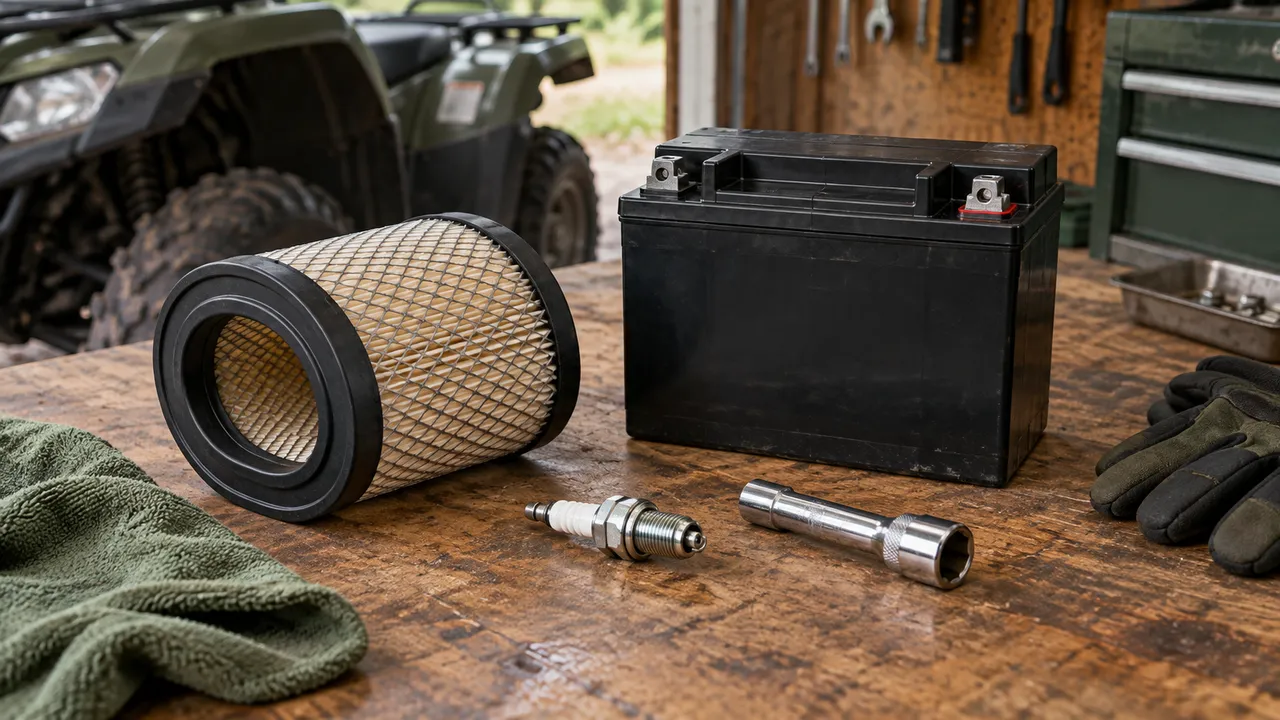
When your ATV will not start, first identify whether the engine fails to crank or cranks but does not fire. For no-crank symptoms, check normal starting controls, battery charge and connections. For crank-no-start symptoms, check the specified starting procedure and fuel before following the model’s ignition and engine troubleshooting instructions.
Describe the no-start symptom before changing parts
Cranking means the starter is turning the engine; starting means the engine begins running under its own power. Those are different events. Saying “it won’t turn over” when the engine actually spins can send troubleshooting toward the wrong components.
Listen for silence, one click, repeated clicks, slow rotation or normal rotation. Watch whether the instruments remain lit or reset. Write down whether the issue started after storage, washing, a battery replacement or accessory installation. These observations help choose the next check without buying parts first.
| Observation | First direction to investigate |
|---|---|
| No sound and no display | Battery supply and accessible connections. |
| Display on, starter silent | Required controls, fuses and starting circuit. |
| Clicking or slow engine rotation | Battery charge, terminal connections and a battery test. |
| Engine rotates but does not fire | Starting procedure, fuel and model-specific engine diagnosis. |
Check the kill switch, start button and starter motor circuit
Secure the machine and read the starting page for the exact model year. Check the kill switch, also called the engine stop switch, and the required transmission, brake or clutch position. Different ATVs use different conditions to permit starting; an instruction for a neighboring model is not a reliable substitute.
Look at warning indicators and record any displayed code before switching things repeatedly. An interlock that prevents starting may be operating correctly. Do not bypass it or short the starter solenoid with a screwdriver. If a control or sensor appears faulty, use the service procedure or a qualified technician.
Inspect battery terminals and cable condition
With the ignition off, inspect accessible terminals for looseness, corrosion and damaged insulation. Check that cable ends sit correctly and that protective covers and the hold-down are present. Follow the owner’s manual if cable removal or cleaning is necessary, including its torque requirements.
Look especially closely after a recent battery change. A terminal bolt may feel tight while the cable end is not seated properly. The battery can also have the wrong terminal orientation, causing stretched cables or poor contact. Correct installation is a separate question from whether the new battery is charged.
Stop if a cable or battery becomes unusually hot, the case leaks, or there is a burnt smell. Take a clear photograph for the repair shop rather than making more starting attempts. Keep metal tools away from any path between the positive terminal and chassis.
Check a weak battery before replacing the starter motor
Use a charger approved for the battery’s chemistry and capacity. Read its instructions and the battery maker’s charging limits. A voltage reading alone is not a complete health test; have a compatible battery test performed when a charged battery still cranks poorly.
Avoid applying a single lead-acid voltage threshold to every chemistry. Tell the battery tester operator if the ATV has a lithium replacement. A multimeter helps check voltage, but does not replace a compatible battery performance test.
If the battery passes but the engine still turns slowly, the cables and starting system need further diagnosis. A larger battery does not repair a high-resistance connection, starter fault or mechanical problem. Use the model’s service limits instead of replacing components in sequence.
ATV battery charging and storage →
Understand cold cranking amps →
If the ATV cranks but will not start: check the fuel system
Confirm there is appropriate fuel and follow the manual’s cold- or warm-start procedure. A carbureted ATV may have different controls from a fuel-injected one. Do not copy throttle or choke instructions from another model, and respect the prescribed pauses between attempts.
After sitting, an ATV may need both battery attention and a fuel-system check. A carburetor-equipped machine and an EFI machine need different diagnosis. Check only the owner-accessible items in the manual, such as the fuel valve position where fitted. Do not disconnect a pressurized fuel line to see whether fuel arrives.
A fuel filter clog, carburetor problem or fuel leak needs the appropriate service procedure. Stop starting attempts if you see leaking fuel. Give the mechanic the storage history and fuel age; this helps direct diagnosis without guessing at adjustments or replacing the fuel system piece by piece.
Spark plug, air filter and compression checks
A fouled or defective spark plug is another possible crank-no-start cause. If the manual permits owner inspection, check the spark plug using its specified access procedure. Match the exact spark plug type, gap and torque if replacement is required. Do not hold a removed spark plug against the engine for an improvised spark test near fuel.
Check the air filter and intake for obstruction using the owner’s maintenance instructions. Replace or service the air filter as specified to restore correct airflow; running without the filter exposes the engine to dirt. A damaged spark plug cap or ignition wire also needs inspection under the appropriate procedure.
When fuel and ignition checks do not resolve the symptom, a mechanic may need to assess engine compression. Low compression can involve valve sealing or other internal faults; a compression test must use the model’s procedure and limits. Do not diagnose worn piston rings or adjust valves from the starter sound alone.
Decide between recovery, replacement and service
A jump start can help recover a permitted low-battery situation, but it does not identify the original fault. If the ATV runs after a boost, check battery condition and charging before the next outing. If the same symptom returns, investigate why the charge was lost.
Give the repair shop the model code, battery type, exact symptom and checks already completed. If testing confirms replacement is needed, use the finder to compare the right battery for the year and trim. Avoid ordering solely from engine displacement or the appearance of the old case.
Frequently asked questions
Why does my ATV click but not start?
Clicking can accompany low battery charge or a poor connection, but it does not prove the battery has failed. Inspect connections, charge appropriately and test the battery before investigating the starter circuit.
Can lights work when the battery will not crank the engine?
Yes. Working lights do not establish adequate starting performance. A battery and connection check is still appropriate when the engine turns slowly or the display resets during cranking.
Why won’t my ATV start with a new battery?
Check charge preparation, polarity, terminal seating and the correct battery application. If the engine cranks normally, investigate starting controls and the engine troubleshooting path rather than assuming another battery will fix it.
What are signs of a bad ATV starter solenoid or start button?
A silent starter or a click without cranking can occur with a starting-circuit fault, but also with low battery charge, a poor connection or an interlock condition. Test the battery first, then have the switch and solenoid checked against the service manual; sound alone does not identify the failed part.
Bring it back to your ride
Find your ATV in the catalog, browse battery size references or explore the other field guides.